Atmospheric Conditions Shaping Forecast Accuracy in Outdoor Event Services
Written by Katja Hayes · Nov 7, 2026
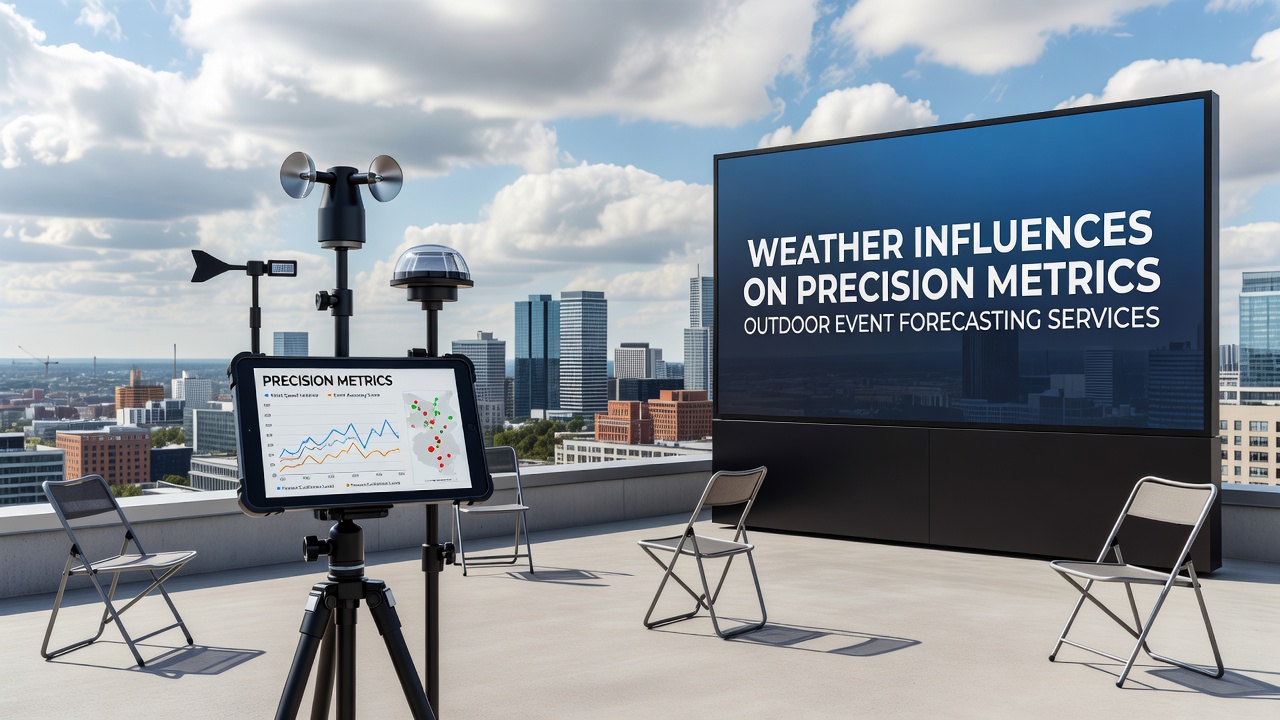
Atmospheric Conditions Shaping Forecast Accuracy in Outdoor Event Services
Temperature Fluctuations and Model Adjustments
Outdoor event forecasting services rely on temperature data to calibrate predictions for attendance patterns, equipment performance, and scheduling adjustments, while researchers have documented how daily temperature swings of more than 10 degrees Celsius alter the reliability of baseline models by up to 18 percent according to studies from the National Oceanic and Atmospheric Administration. Services integrate real-time readings from ground stations and satellite feeds, which allows them to refine projections for events such as marathons and open-air concerts where heat stress thresholds directly influence participant safety metrics.
Observers note that colder conditions in late autumn require additional layers of ensemble modeling, since frost formation on surfaces changes traction estimates and alters crowd flow simulations. In November 2026, several North American forecasting platforms reported measurable gains in precision after layering localized temperature inversions into their algorithms during major festivals.
Precipitation Patterns and Wind Dynamics
Rainfall intensity and wind speed combine to affect visibility, surface conditions, and structural stability assessments, which in turn modify the confidence intervals attached to event continuation forecasts. Data from the Australian Bureau of Meteorology shows that sustained winds above 25 kilometers per hour reduce forecast precision for large gatherings by shifting expected arrival times and increasing equipment failure probabilities. Services therefore incorporate radar-derived precipitation nowcasts that update every 15 minutes to maintain tighter error margins.
Lightning proximity alerts add another variable, since services must balance evacuation timelines against forecast accuracy for storm cell movement. Those who manage outdoor tennis tournaments and golf events often integrate these wind and precipitation layers to adjust court or course readiness indicators without overcorrecting for transient showers.
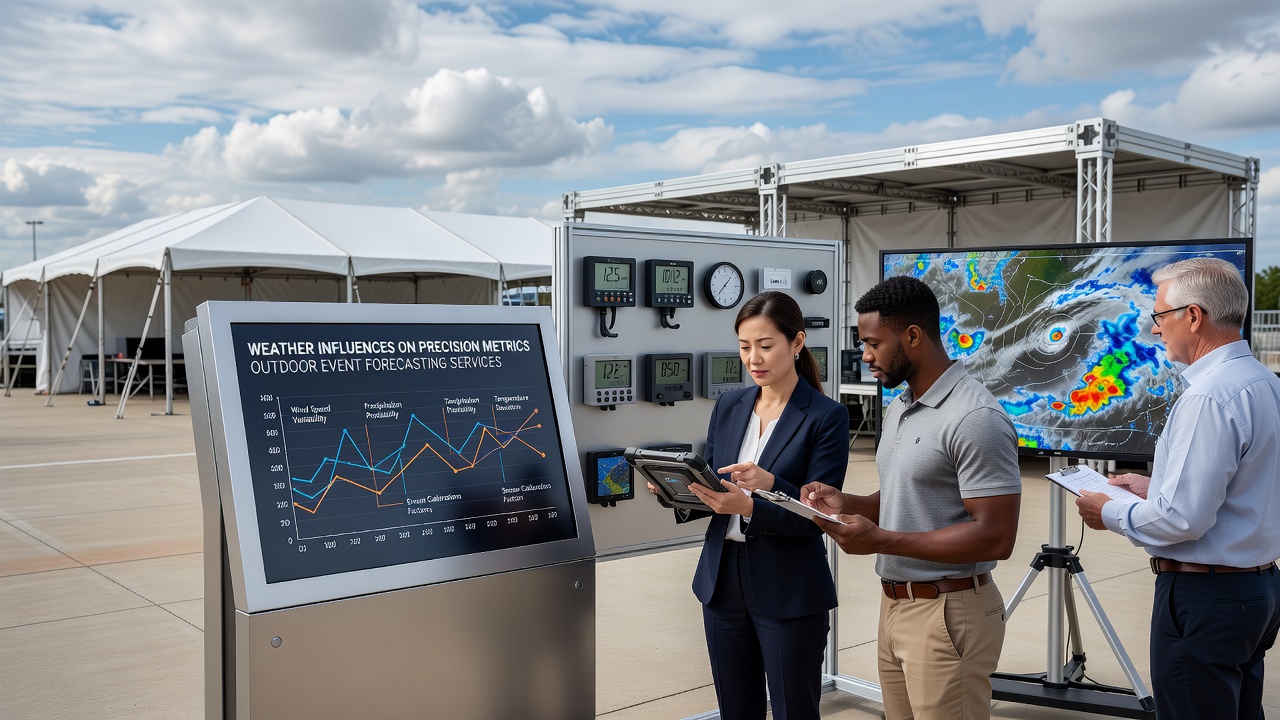
Integration of Advanced Meteorological Inputs
Forecasting platforms combine numerical weather prediction outputs with machine learning corrections derived from historical event records, which improves the calibration of precision metrics such as root mean square error on attendance and timing forecasts. European Centre for Medium-Range Weather Forecasts products supply boundary conditions that regional services downscale for venue-specific microclimates, allowing operators to quantify uncertainty ranges more explicitly. Humidity gradients near coastal or mountainous sites introduce further complexity, since they influence both perceived temperature calculations and audio-visual equipment tolerances.
Services handling multi-day outdoor festivals track cumulative precipitation totals across preceding weeks because saturated ground conditions alter drainage forecasts and parking surface predictions. These layered inputs help maintain consistent performance across diverse geographic regions without relying on single-source data streams.
Regional Variations and Service Adaptations
Forecasting accuracy varies by latitude and elevation, with high-altitude venues experiencing greater sensitivity to rapid pressure changes that affect oxygen availability estimates for participants. Canadian meteorological services publish verification statistics showing that mountain event forecasts achieve higher skill scores when orographic lift parameters receive explicit weighting. Lowland tropical locations, by contrast, emphasize convective available potential energy metrics that drive afternoon thunderstorm timing predictions.
Providers adjust their metric weightings seasonally, since winter event services prioritize freeze-thaw cycles while summer operations focus on heat index exceedance probabilities. These adaptations keep overall precision metrics within documented operational tolerances across different climate zones.
Conclusion
Weather variables continue to drive iterative improvements in the precision metrics used by outdoor event forecasting services, as agencies and research institutions supply increasingly granular data streams that operators integrate into operational models. Continued refinement of these inputs supports more reliable planning for events held under variable atmospheric conditions worldwide.